
Happy Return to UK for Alfred Russel Wallace
Posted on 31. Mar, 2026 by Paul Sochaczewski in Alfred Russel Wallace and his assistant Ali
Jilted, Culture Shock, Illness, Writer’s Block, and Unpacking 20,000 Beetles
Stress From Alfred Russel Wallace’s Move Caused a Long Delay in Writing His Most Famous Book

Decluttering was not an option for Alfred Russel Wallace. He needed his thousands of specimens to write his papers and most famous book, The Malay Archipelago. His “clutter” provided security and nourished his sense of achievement. But in a way all those shipping crates filled with “natural productions” overwhelmed him and held him back from writing his big book.
Happy Return to UK for Alfred Russel Wallace (1862) — April 1
HURSTPIERPOINT, West Sussex, England
Moving is one of life’s most stressful activities. Consider Alfred Russel Wallace’s trying experience.
After spending eight extremely productive but difficult years in Southeast Asia (1854-1862), the anxiety, tension, and uncertainty Alfred Russel Wallace suffered upon returning to England on April 1, 1862, forced him to apologize for the delay in publishing what turned out to be his most famous book. In the preface to The Malay Archipelago, published in 1869, Wallace wrote: “My readers will naturally ask why I have delayed writing this for six years after my return. . . .”
Let’s examine some of the reasons why he took so long to write his book. Bear in mind, some of my suggestions are speculative. It is impossible to fully understand another person’s emotions, challenges, and fantasies. Writing history is decidedly slippery; while Wallace was a clear writer, when speaking about his personal life, he misremembered (sometimes deliberately), filtered, edited, enhanced, and obfuscated, just as we all do. Nevertheless, enough has been written by and about him that I feel emboldened to come up with a narrative, broken into five categories: Writer’s Block and Displacement Activities; Too Much Stuff; Toils, Troubles, and Intellectual Overload; Love: Mysterious, Jilted, and Happy Ever After; and Success.
Part I: Writer’s Block and Displacement Activities
Every writer knows that writing a big book, particularly one that the writer feels will be important and hopefully lucrative, is daunting. (Darwin procrastinated writing about evolution for years, partly because he didn’t understand the mechanism for natural selection — which Wallace inadvertently gave him — and partly out of anxiety that his wife’s well-placed, conservative, and devoutly Christian family — the Wedgewoods, of pottery fame — would find the idea of evolution blasphemous.)
It’s much easier to write short pieces that can be produced in a few days than to write a big book (which is precisely what I’m doing now by writing about Wallace instead of working on my novel). Call it displacement behavior, call it whatever you want. Yet, while he was procrastinating on his book, Wallace was still productive: “Since my return, up to this date [1869], I have published eighteen papers… describing or cataloguing portions of my collections; besides twelve others in various scientific periodicals.”
Indeed, it is rare to find a writer who does not suffer from writer’s block. Authors as diverse as Leo Tolstoy, J.K. Rowling, Stephen King, Samuel Coleridge, Herman Melville, Joseph Conrad, Ernest Hemingway, and Virginia Woolf had long periods of creative drought. Victor Hugo hid his clothes to force himself to stay home and write. A fictional example can be found in George Orwell’s novel Keep the Aspidistra Flying, in which the protagonist Gordon Comstock struggles in vain to complete an epic poem: “[The work] was too big for him, that was the truth. It had never really progressed; it had simply fallen apart into a series of fragments.” Two famous writers used tactics similar to those Wallace employed: Isaac Asimov, a respected scientist who had (as did Wallace) a multitude of diverse interests, worked on several projects simultaneously, switching typewriters when stuck. And John Steinbeck wrote letters to friends to jump-start the process and get words (that didn’t have to be perfect) flowing.
The causes vary — one analysis came from Austrian psychoanalyst Edmund Bergler, who, in a convoluted Germanic explanation, in 1947 said writer’s block was caused by oral masochism, a result of having been bottle-fed as a baby, and an unstable love life — at least the bit about the “unstable love life” reflects Wallace’s predicament. I would add that Wallace was facing other issues — apprehension about how personal his writing should be (turns out it is quite personal and revealing; I especially appreciate the passages in The Malay Archipelago where he describes the “passion” of finding a beautiful new butterfly or bird), and the pressure of needing to produce an “important” work that would ease his entry into British scientific society.
Nevertheless, many writers just get on with it and dismiss excuses as a weakness of spirit, a disruptive self-indulgence. Norman Mailer said, “Writer’s block is only a failure of the ego.” Jerry Seinfeld said, “Writer’s block is a phony, made-up BS excuse for not doing your work.” Terry Pratchell said, “There’s no such thing as writer’s block. That was invented by people in California who couldn’t write.” And one forgotten philosopher added: “Writing is a trade. You never hear of an electrician having ‘wiring block’ or a plumber unable to plumb.”
Part II: Too Much Stuff
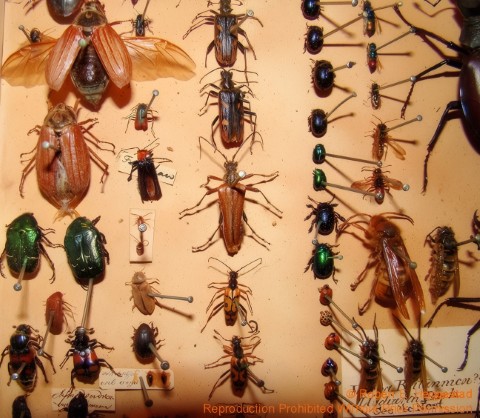 Collection of Robert Heggestad. Used with permission.
 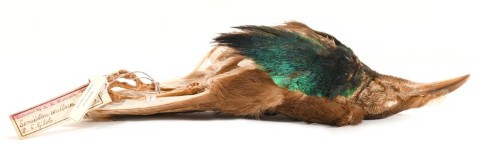 Ruzaini Bin Ghazali. Lee Kong Chian Natural History Museum, Singapore. Used with permission.
 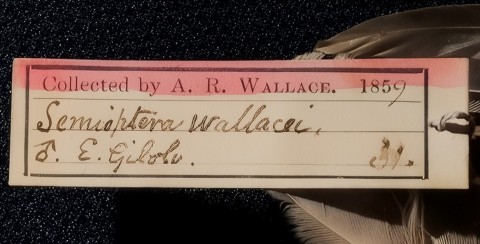 Frankie Fuller. Used with permission.
 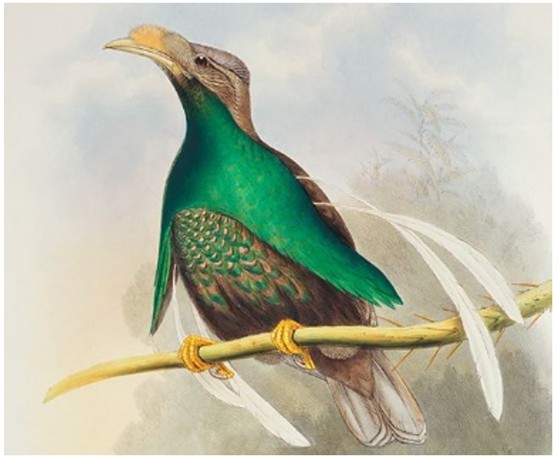 Hand-colored lithograph of Semioptera wallacii by John and Elizabeth Gould from John Gould’s The Birds of Australia. Trustees of the Natural History Museum, London.
 On his return to the UK, Wallace was confronted with a mammoth unpacking task. He was surrounded by crates containing some 3,000 bird skins and 20,000 butterflies and beetles that had to be sorted, classified, and either sold or put aside for his personal collection. The tray of beetles shown above are from Wallace’s private collection. The bird skin, label, and illustration shown is Semioptera wallacii, a bird of paradise that is one of the roughly 5,000 birds said to have been collected by Ali and is the object of his statement when he presented the dead bird to Wallace: “Look here, sir, what a curious bird.”

Stuff can evolve into more stuff, then into either too much stuff (hoarding) or into a curated collection. I like to think Wallace’s stuff morphed into the collection category, where “stuff” was catalogued, admired, and respected.
Everyone knows the drill. We all have too much stuff, and most people understand that the best time to declutter your home (and your mind) is before you move. (For more about why physical objects are so important to us, see “Why Do We Collect?”)
Wallace wrote about how his home in the UK was stuffed with stuff:
When I reached England in the spring of 1862, I found myself surrounded by a room full of packing cases, containing the collections that I had from time to time sent home for my private use. These comprised nearly three thousand bird-skins, of about a thousand species; and at least twenty thousand beetles and butterflies, of about seven thousand species; besides some quadrupeds and land-shells. A large proportion of these I had not seen for years; and in my then weak state of health, the unpacking, sorting, and arranging of such a mass of specimens occupied a long time.
I find it hard to imagine the spectacular chaos of dozens of heavy wooden cases containing 3,000 bird skins and 20,000 butterflies and beetles, many waiting to be sorted, identified, and either sold on or kept back to find a place in his private collection. Exciting? Certainly. An anchor on returning to a new “normal”? Absolutely. A source of stress? Without a doubt.
It would have been impossible for Wallace to declutter. His thousands of specimens defined him — these dead critters were evidence of his achievements. They were essential for four reasons:
- After his disastrous voyage returning to the UK from Brazil ten years earlier, when he lost most of his four-year collection, and almost his life, he wanted the security of having his private collection intact and within arm’s reach. All those Asian butterflies and beetles comforted him. They were, in a way, like the security blanket carried everywhere by Linus in Peanuts.
- Once identified and catalogued, he could sell the duplicate specimens.
- The specimens were evidence through which he could write scientific papers and his travel book.
- He hoped his carefully curated collection would solidify his reputation as a careful scientist who should be taken seriously by the stuffy eminences grises of the British scientific establishment. For example, after learning that his Ternate Paper had been presented at The Linnean Society by none other than scientific luminaries geologist Charles Lyell and botanist Joseph Hooker, Wallace wrote to his old friend George Silk, with understated humility: “As I know neither of them, I am a little proud.”
Part III: Toils, Troubles, and Intellectual Overload
The Need to Socialize
While in Southeast Asia, Wallace spent long periods alone, without companions with whom he could discuss the meaning of life. He wrote to his childhood friend George Silk (November 30, 1858) from isolated Batchian (Bacan) island: “You cannot perhaps imagine how I have come to love solitude. I seldom have a visitor but that I wish him away in an hour.” (Wallace ended this letter with a charming P.S. “A big spider fell close to my hand in the middle of my signature [which] accounts for the hitch.”) On his return to England, I can imagine that Wallace was overwhelmed by the imperative that he constantly engage in social discourse.
Culture Shock
Wallace returned to the UK during a time of significant technological and societal changes, some of which he welcomed, some of which he felt obliged to criticize. Because he was a polymath, there was no shortage of subjects that would have either excited him or deserved his outrage.
He had to adjust to new realities.
It was all so . . . alien. The weather, obviously. The hustle, the dirt, the noise, the politics. The lack of green. Socially, he had become skilled at dealing with people who thought and behaved in ways that differed from his British compatriots — he had to relearn the British way of negotiating and relating to others. The world of arts was also evolving — Alfred, Lord Tennyson wrote “Charge of the Light Brigade,” Henry David Thoreau wrote Walden, and authors as diverse as Walt Whitman, Herman Melville, Nathaniel Hawthorne, Emily Dickinson, Fyodor Dostoevsky, and Victor Hugo were part of a new era in literature. Wallace was a voracious reader (in English and French); I can imagine him frequenting local booksellers or libraries to see what books had just been published.
Illness and Exhaustion
In The Malay Archipelago, Wallace frequently wrote about his suffering fevers, sores, and periods of disability. When he returned to the UK, he was tired and exhausted, both mentally and physically.
Slavery
Wallace was anti-slavery, and he likely was pleased that the practice was slowly being abolished. The newspapers published stories about the American Civil War and Lincoln’s Emancipation Proclamation. During the same period the Lyons-Seward Treaty between the United States and Great Britain, an aggressive measure to end the Atlantic slave trade, was signed.
Technological Revolution
In 1858 the first trans-Atlantic telegraph cable was laid, and pasteurization was introduced, as was Parkesine (1862), the first synthetic plastic. The 28,000 exhibitors from 36 countries at the International Exhibition of 1862 introduced dozens of exciting scientific and technical innovations that were going to have a major impact on society. Highlights included the use of caoutchouc for rubber production and the Bessemer process for steel manufacture.
Colonialism
While the British Empire gained strength with the establishment of the British Raj in 1858, Wallace rallied against the premise that any nation in the tropics needed to be colonized. He noted that colonized lands worldwide were usually acquired through questionable actions and that degrading labor practices supported their economies. He called for all colonies to be handed back to Indigenous peoples and decades later declared that the worst aspect of the century was the way Europeans mistreated native peoples worldwide. Writing specifically about Borneo and the Malay Peninsula he said, “the reckless destruction of forests, which have for ages been the protection and sustenance of the inhabitants, seems to me to be one of the most short-sighted acts of colonial mismanagement.” He similarly condemned the environmental impact of colonial mining (particularly gold and tin) in the Malay Archipelago (“stark reminders of the greed of commerce unchecked by reason or compassion”), and pointed out that “the rapid degradation of fertile valleys and the poisoning of streams by mining waste serve as stark reminders of the greed of commerce unchecked by reason or compassion.”
Conservation
Much has been made about Wallace’s seemingly non-conservation-like practices, and, in a sense, his actions contradicted his philosophy.
He shot, stuffed, and preserved the bones of 17 orangutans, and had little compunction about dissecting, preserving, and pickling just about anything that walked, flew, crawled, or lived under a rotting log. The big, gaudy varieties of butterflies fetched high prices, and the feathers of the brightly colored parrots and birds of paradise he sent back to the UK helped fuel the market for such birds to produce fashionable ladies’ hats.
But Wallace returned to the UK and condemned “the reckless destruction of forests…one of the most shortsighted acts of colonial mismanagement.” His was a lonely voice promoting conservation and warned that nature’s destruction could only be avoided by taking much more equitable approaches to resource use.
Pollution
Charles Dickens, in his 1853 novel Bleak House, wrote about “Smoke lowering down from chimney-pots, making a soft black drizzle, with flakes of soot as big as full-grown snow flakes — one into mourning for the death of the sun.” Wallace, in his customary direct style, called this situation “criminal apathy,” and blamed industrialists, the courts, politicians, and scientists. In a remark that has resonance today he urged, “Let this be our claim: ‘Pure air and water for every inhabitant of the British Isles.’”
Intellectual and Emotional Overload
If he had been a Gilbert and Sullivan character, we might describe Wallace as a “very modern naturalist.” He was both a rigorous scientist and was a proponent of social reform. He was clear in his arguments, yet had a romantic streak. Wallace was a polymath with what might be termed a “monkey mind,” a brain interested in many seemingly disparate issues that ranged far beyond natural history. I’m reminded of Napoleon Bonaparte’s comment “my mind is a chest of drawers.” Wallace was a mental multi-tasker, perhaps to the extent that, during the years of his stressful return to the UK, he allowed his energy to drift from writing The Malay Archipelago and instead ruminated (and later wrote) passionately and intelligently about issues that included vivisection, gambling, foreign aid, land nationalization, sweatshops, “red-tapism,” child labor, women working in coal mines, and the question of whether there was life on Mars. For instance, Wallace was angered by the “revival of the war spirit throughout Europe, which region has now become a vast camp, occupied by opposing forces greater in numbers than the world has ever seen before. These great armies are continually being equipped with new and more deadly weapons, at a cost which strains the resources even of the most wealthy nations, and by the constant increase of taxation and of debt which impoverishes the mass of the people.”
Figuring Out His Place in UK Scientific Hierarchy
Wallace was deeply concerned about how he would be received by the class-conscious British scientific establishment. Remember, Wallace came from a middle-class family with little money or social presence. He was forced to leave school of the age of 14 (which makes his academic achievements all the more exceptional) and never went to a university, let alone Oxford or Cambridge, which were the breeding ground for British elite scientists. And he had sometimes-outrageous ideas (land nationalization, women’s rights, food and drug controls, anti-slavery, minimum wage, spiritualism) that were cause for concern by the establishment. Nevertheless, he tried, with considerable success, to navigate the tricky role of gadfly with the activities and publications that positioned him as an important man of science. He was flattered that Charles Darwin favorably compared him to Charles Lyell and Joseph Hooker, and within a few years of returning, Wallace found himself hobnobbing with other scientific and intellectual celebrities, such as Herbert Spencer, Francis Galton, William Crookes, Karl Pearson, Thomas Henry Huxley, Alfred Conan Doyle, Rudyard Kipling, George Bernard Shaw, John Muir, and William Gladstone.
Eventually, this socially awkward adventurer of modest social status earned respect for his scientific achievements; he was with them, but he wasn’t necessarily of them.
Part IV: Love: Mysterious, Jilted, and Happy Ever After
The little-known narrative of Wallace’s love life shows that he was a sensitive man who longed to marry a soulmate. He got there in the end, but it wasn’t an easy journey. For more details, see “The Untold Story of Alfred Russel Wallace’s Up and Down Love Life,” which details seldom reported information about Wallace’s three known love adventures. First, there is the tantalizing evidence that he might have gotten engaged to a lady in Brazil (see the “Breaking News” at the end of this article to learn the name of the young woman). Then the heartbreaking tale of how he fell in love with a well-placed English lady shortly after returning to the UK, only to be abruptly jilted just months before the wedding. And finally, happiness — he found lasting love with Annie Mitten, a young woman who shared his interest in horticulture and nature, and, as a bonus, had a father who was a famous botanist about the same age as Wallace and shared mutual interests. After their marriage on April 5, 1866, Wallace and Annie lived in her family home in Treeps, West Sussex, where Wallace could finally relax and focus on his book. He tended the family garden, enjoyed long walks on the nearby South Downs, and finally unpacked his crates of “natural productions.” At last, he was able to focus on writing The Malay Archipelago, which was published in 1869, some seven years after returning to the UK. It is one of the most acclaimed travel books of all time.
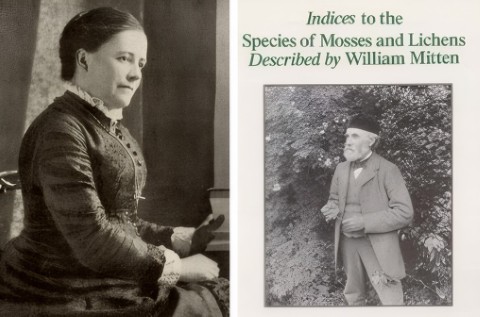 Annie Wallace c. 1895 (she would have been around 30). From Alfred Russel Wallace: Letters and Reminiscences by James Marchant (1916)
 William Mitten’s daughter Annie was the perfect wife; her father the ideal father-in-law.
Part V: Success
In a way, Wallace’s belief that he needed a wife to earn stature in the British scientific community was true. After his congenial marriage to Annie, Wallace finally wrote The Malay Archipelago; in total, he wrote 21 books, some 600 academic papers and articles, and thousands of letters. Upon his death, he was acclaimed as: “The acknowledged dean of the world’s scientists, and “one [of the two] most important and significant figures of the nineteenth century.” More recently, David Attenborough declared: “There is no more admirable character in the history of science.”
BREAKING NEWS
We Have the Name of Wallace’s Possible Brazilian Fiancé
My February 14, 2026, article about Alfred Russel Wallace’s love life (available here) included the suggestion that Wallace might have had a Brazilian fiancé during the time he was collecting on the Amazon and Rio Negro in the mid-19th century.
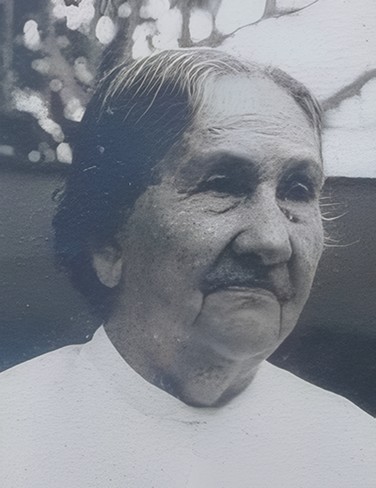
We now have a likely identification: Amélia Lima Brandão (circa 1836-1928).
This detail was reported by George Beccaloni, creator and curator of the Alfred Russel Wallace Correspondence Project, based on new information provided by Professor Ildeu Moreira in Brazil. See Beccaloni’s report here:
The report includes a photo of Amélia Lima Brandão, taken when she was an elderly woman, date unknown:
Other Wallace-related articles can be found on my Substack.
And you might be interested in my two books about Wallace:
 “Look Here, Sir, What a Curious Bird”
Searching for Ali, Alfred Russel Wallace’s Faithful Companion
ISBN:
Trade Paperback: 978-2-940573-41-7
eBook: 978-2-94-573-42-4
310 pages


 An Inordinate Fondness for Beetles
Campfire Conversations with Alfred Russel Wallace on People and Nature Based on Common Travel in the Malay Archipelago, The Land of the Orangutan and the Bird of Paradise
ISBN (Second edition April 2017, 454 pages):
978-2-940573-25-7